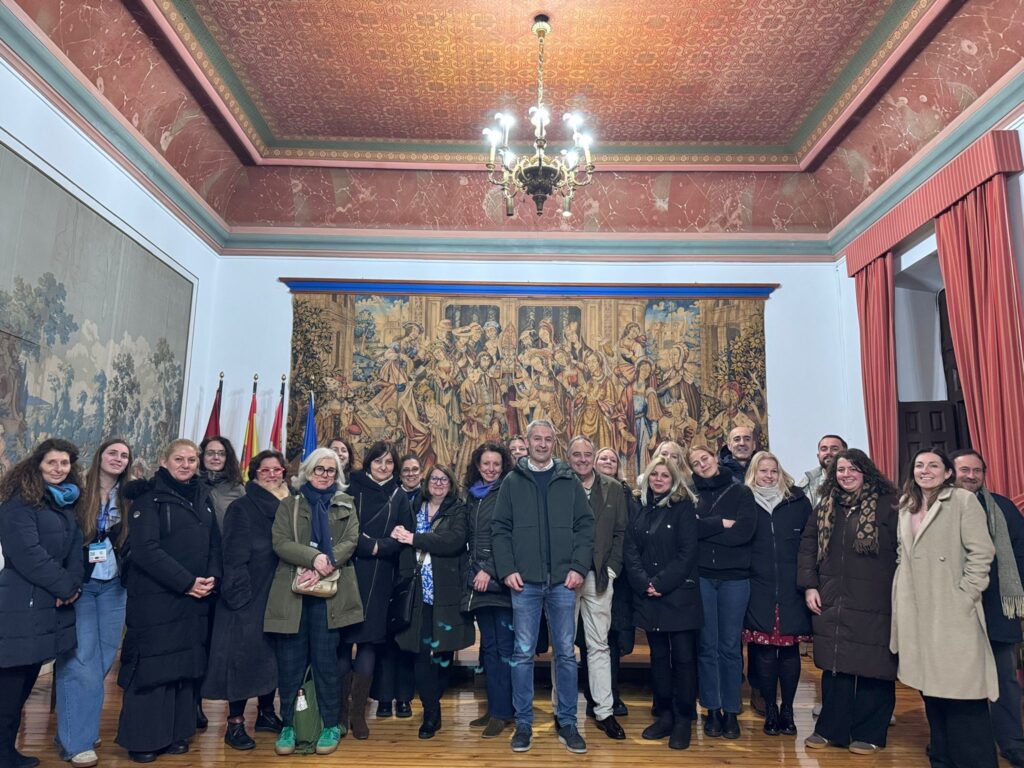
On 21–22 January, the sixth international meeting of the Tourism4SDG project took place in Spain, in the Castilla y León region. The meeting focused primarily on how sustainability goals in tourism can be implemented in a measurable, systematic and business-inclusive way. Tartu County was represented by Miia Maris Praks and Annika Ojasaar from Visit Tartu, together with Villem Lõbu, Sustainable Development Adviser at the Association of Municipalities of Tartu County.
The Tourism4SDG project started in April 2024 and will run until June 2028.
More information: Miia Maris Praks, Sustainable Tourism Coordinator, miia.praks@visittartu.com.
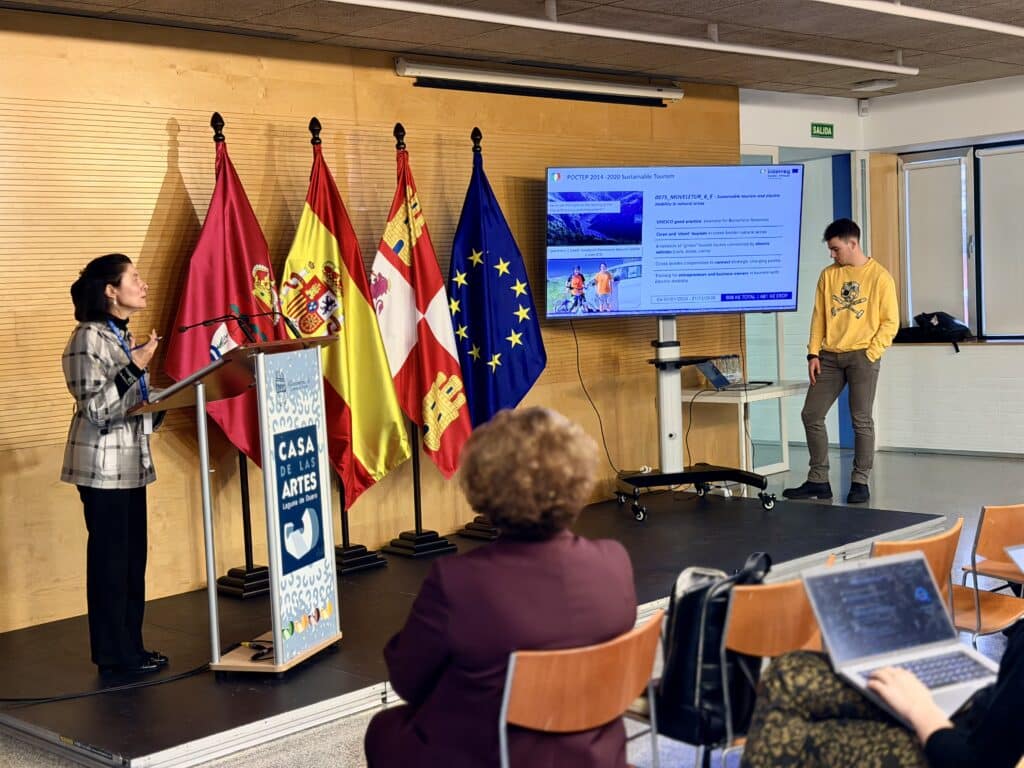
Castilla y León is Spain’s largest autonomous region by area, with a population of approximately 2.3 million. Low population density, extensive Natura 2000 areas, and a strong natural and cultural heritage have shaped a clear focus on rural development and ecotourism. It was emphasised that sustainable tourism is an integral part of regional policy rather than a separate niche. The region has 33 protected areas, six of which have been developed with guided visitor management, local stakeholder working groups, and responsible experience routes. Local production also plays an important role, with over 70 protected designation labels and a systematically developed offer in gastronomy, wine tourism and mushroom tourism, including regulated mushroom harvesting, guided tours and an international truffle festival.
Valladolid is part of the European Creative Cities network and has set the goal of becoming climate neutral by 2030. Its Sustainable Tourism Strategy for 2024–2027 includes nearly 90 concrete measures, such as applying circular economy principles in tourism, “zero plastics” approaches in the HORECA sector, and a requirement for restaurants to develop food waste reduction plans.
On the second day, study visits and discussions focused on cross-border cooperation between Spain and Portugal. Particular attention was given to the POCTEP programme, the largest cross-border cooperation mechanism between Spain and Portugal. Discussions highlighted the growing use of concrete indicators and clear links to the UN Sustainable Development Goals in the evaluation of sustainable tourism projects.
A recurring theme throughout the meeting was measurement and data-driven governance. Regional sustainable tourism observatories were presented, including the North of Portugal Sustainable Tourism Observatory, as well as cross-border monitoring systems that enable tracking the environmental, social and economic impacts of tourism.
For the Tartu delegation, the meeting provided valuable input for next steps: how to better support tourism businesses with simple self-assessment tools, how to embed sustainability principles more clearly into everyday tourism service development, and how to share responsibility so that sustainability becomes a destination-wide practice rather than the task of a single coordinator.